acme-treasury
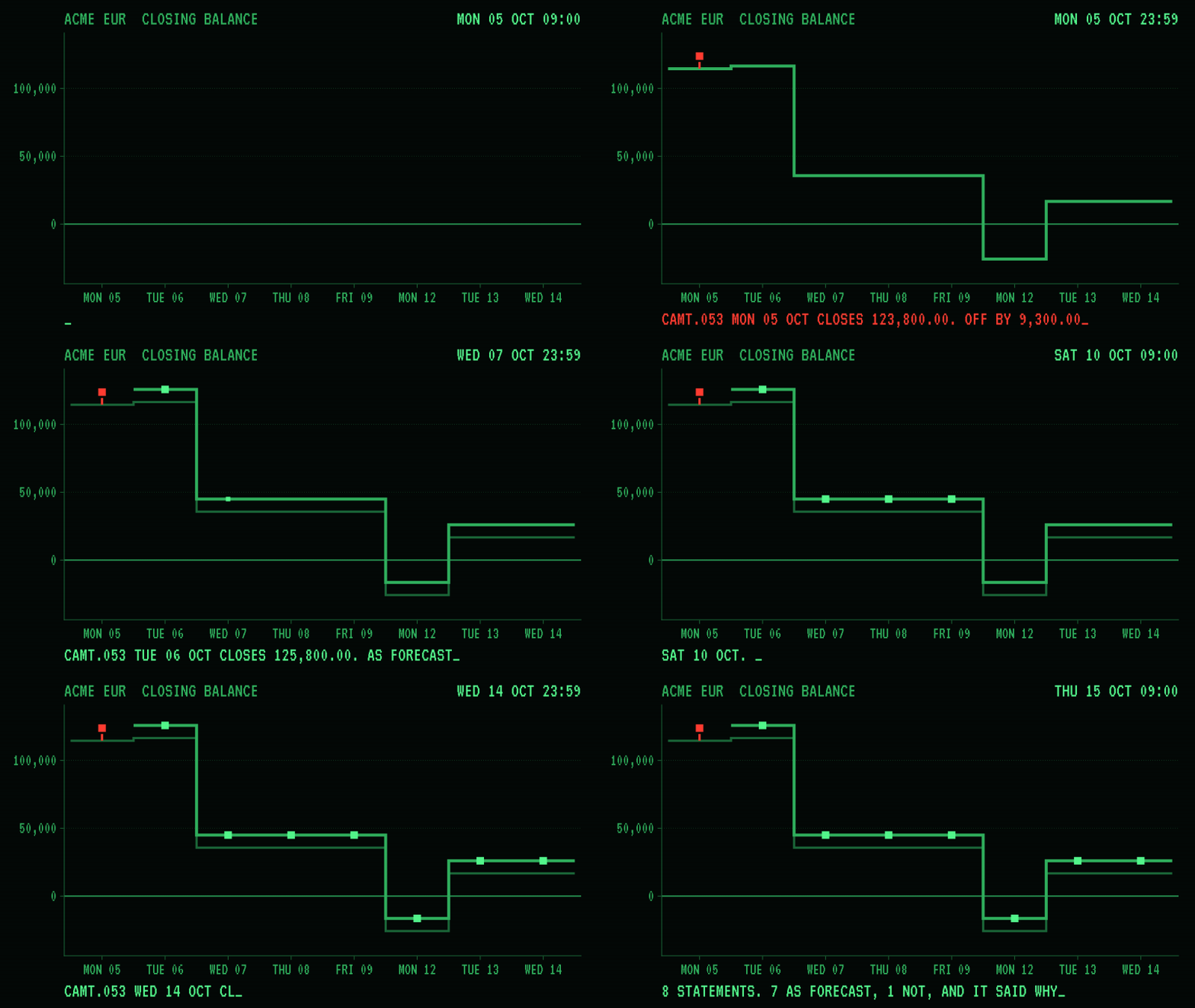
A cash forecast you can check. It reads what mock-sap says is owed and what mock-bank says the account holds, and says what the account will close at on each of the next business days. Then the clocks are moved, mock-acme's payment run pays what is due each morning, and the bank's statements say whether the forecast was right. Most cash forecasts are never held to anything: by the time the day arrives, nobody looks back.
mock-sap   ──open items──────────────▶
                                        acme-treasury  ──▶  closing balance, day by day
mock-bank  ──camt.052, payments,─────▶
             credits, clock, holidays

                        ... a week of mornings and nights ...

mock-bank ──camt.053──▶ the same figure, or the test fails- Held to the bank's statements. Both mocks keep a clock a test can move, so the tests play a week: a forecast every morning before the payment run, and every night the
camt.053for that day, which has to close where the forecast said, to the cent. - A payment at the bank is not owed twice. SAP keeps an item open until a statement clears it, so on the morning after a payment run the same invoice is an open item in SAP and a debit at the bank. They are joined on the
EndToEndIdand counted once. - Money that will not move is listed, not added up. A blocked payable is not money going out, an overdue receivable is not money coming in, and a payment the bank refused will be refused again. Each is listed with its reason. mock-sap 0.20.0 seeds six overdue receivables, 524,619.42 EUR in all, and a forecast that believed them would be comfortable and wrong.
- The calendar is the bank's. After the cutoff, today's run settles tomorrow, and nothing settles on a weekend or a holiday on the bank's list. A payment the bank will return comes back on its day, and is owed again.
- It says where it will be wrong. A supplier closed their account last week and SAP does not know, so Monday's forecast expects to pay an invoice the bank then refuses. Monday is out by that invoice, and Tuesday's forecast lists it with the bank's reason. The film above is that week.
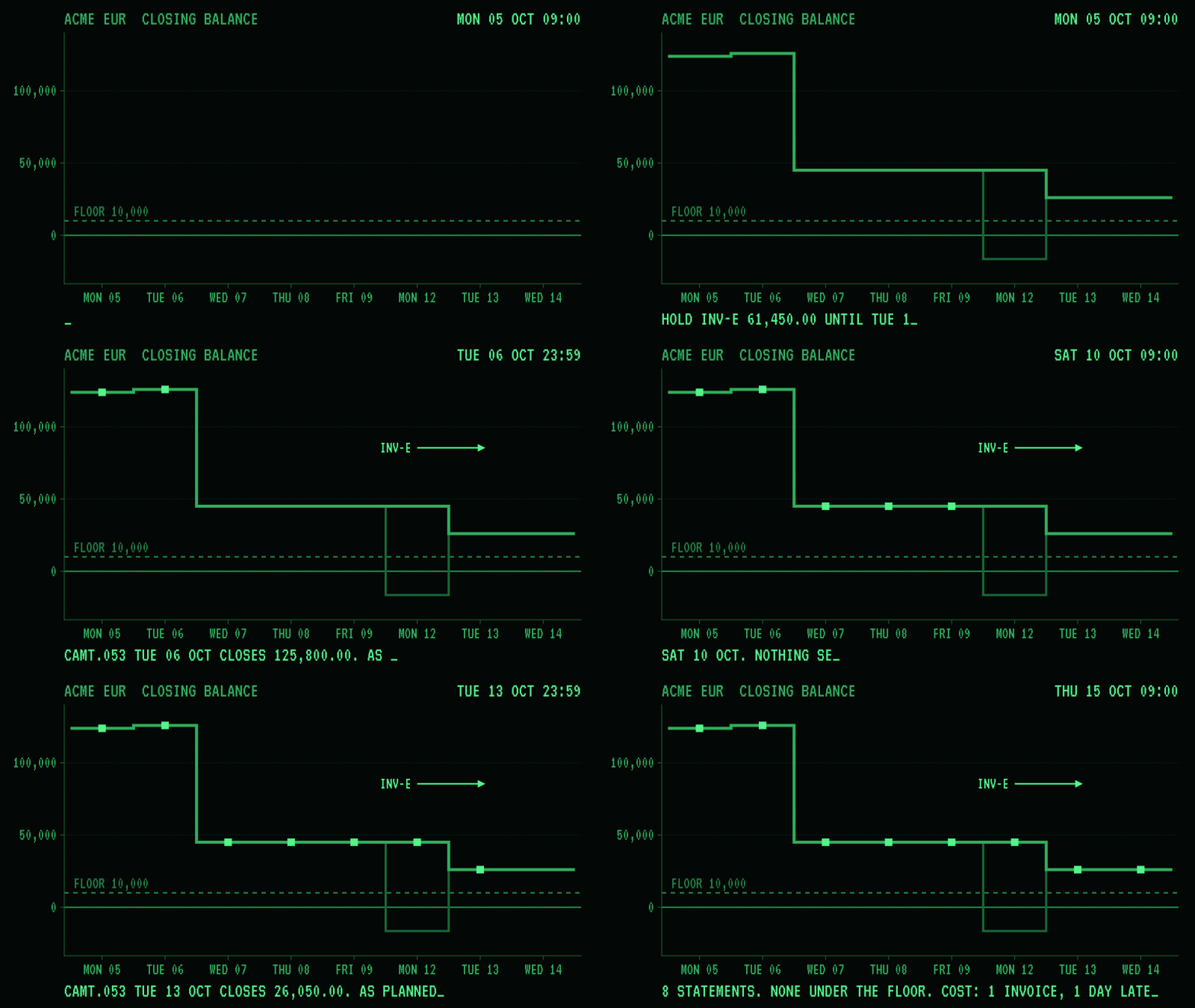
- A payment schedule for when the line dips.
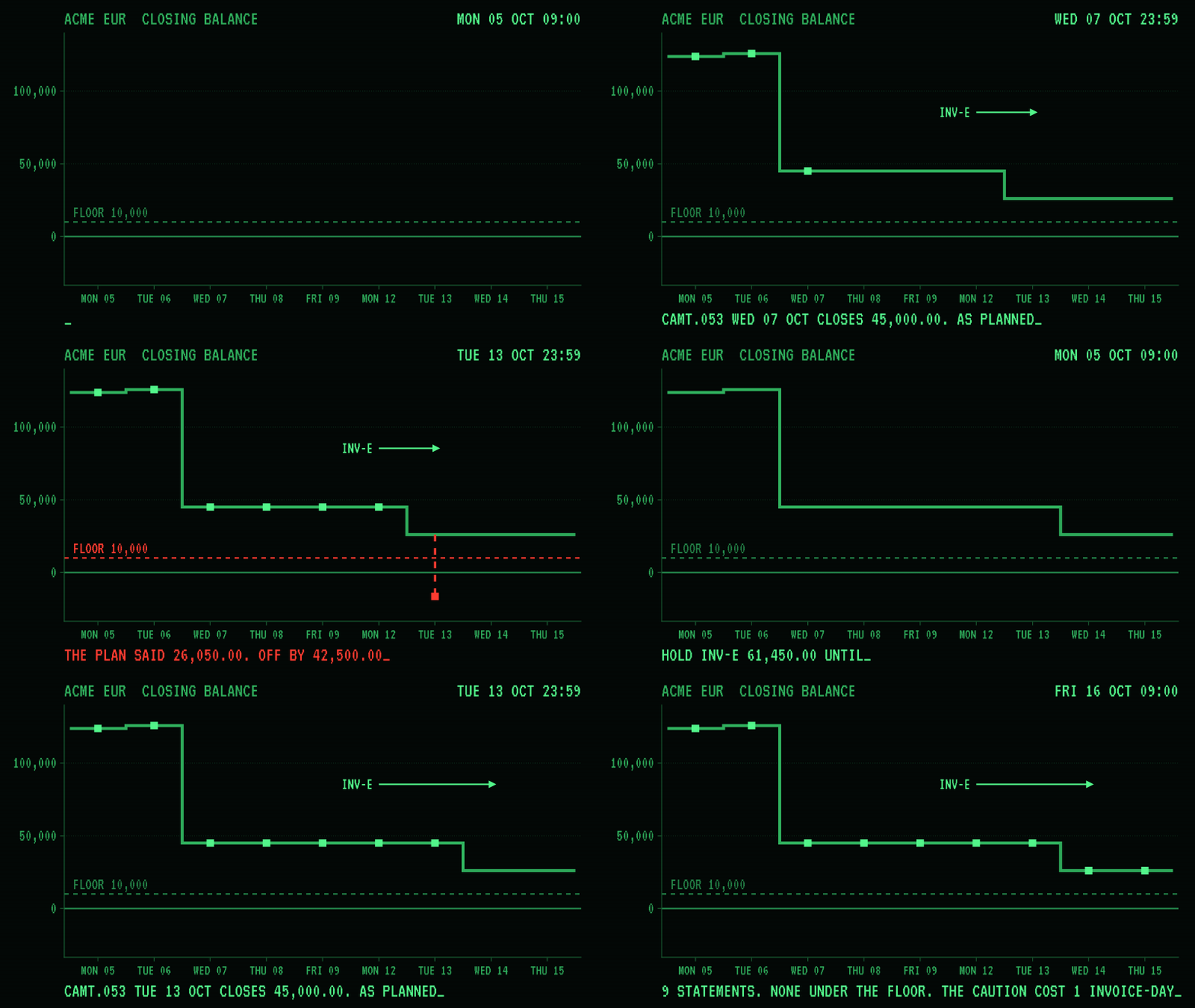
planis a small mixed-integer program, written in JuMP and solved by HiGHS: which invoices to hold, and until which business day, so that no day closes under a floor, holding as little as it can for as short a time as it can.plan --applymakes it happen as a user would, with a payment block in SAP on each held invoice, lifted on the morning it should be paid. It lifts only its own blocks. - Customers may be late. A plan that trusts the due dates lifts its block the day a customer's money is due, and if the money comes a day later the account closes under the floor all the same.
--customers-late-up-to Nholds one plan to the floor for every lateness up to N business days, and--late-customers Kallows for at most K customers late at once, each on their own, rather than all of them together. The output says what the caution costs. The last film below is one week played both ways.
pip install mock-sap mock-bank mock-acme
git clone https://github.com/rseufert/acme-treasury && cd acme-treasury
julia --project=. -e 'using Pkg; Pkg.instantiate()'
bin/demo                                  # a week's invoices, forecast on Monday
bin/acme-treasury plan --days 8 --floor 10000
GitHub · What it holds to · The payment schedule · What it cannot know
Written in Julia 1.13, against the mocks as published: mock-sap and mock-bank, with the payment run from mock-acme.